Montana CryoAdvance 50
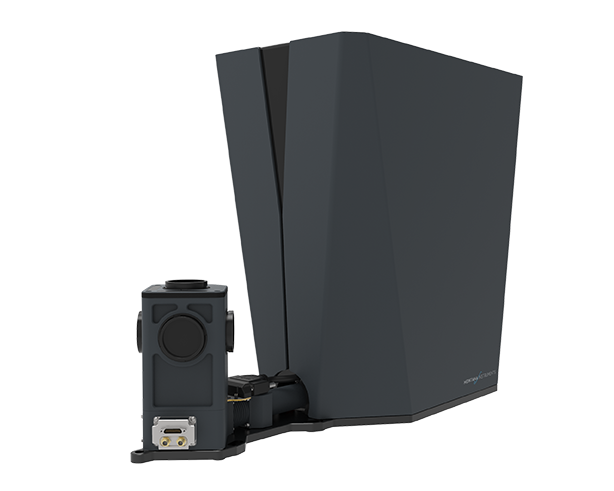
A fully automated, closed-cycle optical cryostat designed for quantum discovery and cold science. It provides a low-vibration, variable-temperature environment (3.2K - 350K) for electrical and optical characterization without the need for liquid cryogens.
System Capabilities
The CryoAdvance 50 is a "sample-in-vacuum" system that eliminates the need for liquid helium, using a closed-cycle cryocooler to reach base temperatures. It is engineered for stability, maintaining temperature within 10 mK and limiting platform vibration to under 5 nm.
It features unobstructed optical access through five windows (4 side, 1 top), making it ideal for photoluminescence and spectroscopy alongside standard electrical transport measurements.
Operating Modes
Electrical Transport
DC and RF feedthroughs allow for Hall effect, I-V curves, and resistivity measurements.
Optical Spectroscopy
Radial and top windows enable laser illumination and imaging (e.g., Photoluminescence).
Quantum Characterization
Stable low-temp environment for testing quantum materials and nanostructures.
Automated Cycling
Galaxy software provides fully automated temperature setpoint control and monitoring.
Technical Specifications
| Temperature Range | 3.2 K – 350 K |
|---|---|
| Cooling Power | 130 mW @ 4.2 K |
| Sample Space | Ø53 mm × 116 mm |
| Optical Access | 5 Windows (60° Full Angle) |
| Electrical Wiring | 20 DC lines + 2 RF Feedthroughs |
| Control Interface | Galaxy Software (Touchscreen) |
Comparison: Closed-Cycle vs. Wet Cryostat
Comparing the Cryogen-Free CryoAdvance against traditional Liquid Helium "Wet" systems.
| Feature | This System (Closed-Cycle) | Traditional (Wet / Flow) |
|---|---|---|
| Consumables | Electricity Only | Liquid Helium (Expensive) |
| Vibration | Low (< 5 nm) | Variable (Boil-off noise) |
| Temperature Stability | Excellent (< 10 mK) | Good (Flow dependent) |
| Operation | Push-button Automation | Manual Transfer Lines |
| Sample Environment | Vacuum | Gas / Vapor |